

Choosing between performance marketing and brand marketing can make or break your business growth. While performance marketing delivers immediate, trackable results, brand marketing builds long-term customer relationships and market authority.
The reality? Most successful businesses don’t choose one over the other—they strategically combine both approaches based on their goals, budget, and growth stage.
This comprehensive guide breaks down everything you need to know about performance vs brand marketing, when to use each strategy, and how to create a winning combination that drives both immediate results and sustainable growth.
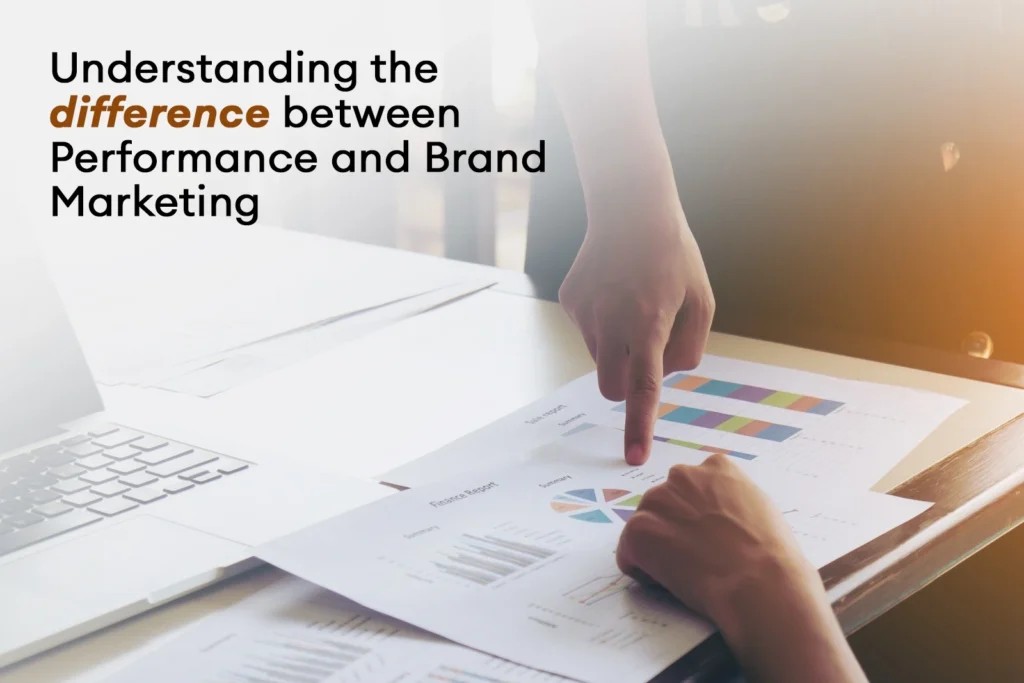
Understanding the Difference Between Performance and Brand Marketing
What is Performance Marketing?
Performance marketing is a results-driven approach where you pay only when specific actions occur. Every dollar spent is tracked, measured, and optimized for maximum return on investment.
Core characteristics of performance marketing:
- Pay-for-results model – You only pay when someone clicks, signs up, or purchases
- Immediate measurability – Track ROI, conversion rates, and cost per acquisition in real-time
- Short-term focus – Designed to generate quick wins and immediate revenue
- Direct response driven – Clear calls-to-action that prompt immediate user action
- Highly targeted – Reaches users who are ready to buy or take action
Key performance marketing channels:
- Google Ads (search, display, shopping)
- Meta Ads (Facebook, Instagram)
- TikTok advertising
- Affiliate marketing programs
- Email marketing campaigns
- Retargeting and remarketing
- Amazon advertising
- LinkedIn sponsored content
What is Brand Marketing?
Brand marketing focuses on building awareness, trust, and emotional connections with your target audience. Rather than driving immediate sales, it creates long-term value through brand recognition and customer loyalty.
Core characteristics of brand marketing:
- Awareness building – Increases brand recognition and recall
- Trust establishment – Builds credibility and authority in your market
- Long-term investment – Results compound over months and years
- Emotional connection – Creates lasting relationships with customers
- Broad reach – Targets wider audiences, including those not ready to buy yet
Key brand marketing activities:
- Content marketing and thought leadership
- Social media community building
- Public relations and media coverage
- Influencer partnerships and collaborations
- Event marketing and sponsorships
- Brand storytelling campaigns
- Organic SEO and content creation
- Podcast advertising and sponsorships
The Fundamental Differences: A Complete Breakdown
| Aspect | Performance Marketing | Brand Marketing |
|---|---|---|
| Primary Goal | Drive immediate conversions | Build brand awareness and loyalty |
| Timeline | Immediate to 30 days | 3 months to 3+ years |
| Success Metrics | ROAS, CPA, conversion rate | Brand recall, sentiment, share of voice |
| Budget Approach | Performance-based spending | Ongoing investment |
| Audience Targeting | Bottom-funnel, ready-to-buy users | Full-funnel, broader audience |
| Content Style | Product-focused, direct CTAs | Educational, entertaining, story-driven |
| Measurement | Direct attribution possible | Requires brand lift studies |
| Optimization | Real-time, data-driven | Long-term strategy adjustments |
Why the Traditional View is Wrong
Many marketers still view performance and brand marketing as competing strategies. This outdated thinking creates several problems:
The Performance-Only Trap: Businesses that focus exclusively on performance marketing often hit growth plateaus when:
- Ad costs increase due to platform saturation
- Customer acquisition becomes more expensive
- Brand differentiation weakens, leading to price competition
- Organic growth stagnates without brand authority
The Brand-Only Mistake: Companies that only invest in brand marketing struggle with:
- Difficulty proving marketing ROI
- Slower revenue growth in competitive markets
- Missed opportunities for immediate sales
- Inefficient budget allocation without performance data
The Integration Advantage: Leading companies like Nike, Apple, and Amazon succeed because they masterfully blend both approaches, using performance marketing to capture demand while brand marketing creates it.
When Should You Focus on Performance Marketing?
Performance marketing excels in specific situations where immediate, measurable results are critical. Here’s exactly when to prioritize performance marketing:
1. Business Launch and Validation Phase
New businesses need performance marketing to:
- Validate product-market fit quickly
- Generate immediate revenue to fund operations
- Test different audience segments and messaging
- Prove marketing ROI to investors or stakeholders
- Build initial customer base and testimonials
Recommended budget allocation: 80-90% performance, 10-20% brand foundation
Key tactics:
- Google Ads for high-intent keywords
- Facebook/Meta ads for audience testing
- Landing page optimization
- Email capture and nurturing campaigns
2. Product Launches and Time-Sensitive Campaigns
Performance marketing is essential for:
- New product introductions requiring immediate traction
- Seasonal sales and promotional periods
- Limited-time offers and flash sales
- Inventory clearance campaigns
- Event ticket sales or registration drives
Success factors:
- Clear, compelling offers with urgency
- Highly targeted audience segments
- Optimized landing pages for conversions
- Multi-channel campaign coordination
3. Competitive Market Penetration
Use performance marketing to:
- Quickly capture market share from competitors
- Target competitor brand keywords and audiences
- Test new geographic markets efficiently
- Respond rapidly to competitive threats
- Scale successful campaigns quickly
4. Lead Generation and B2B Sales
Performance marketing drives B2B success through:
- LinkedIn advertising for decision-makers
- Google Ads for solution-focused searches
- Retargeting website visitors with relevant content
- Email marketing automation sequences
- Webinar promotion and registration
B2B performance marketing metrics:
- Cost per qualified lead (CPQL)
- Lead-to-customer conversion rate
- Customer acquisition cost (CAC)
- Sales cycle acceleration
- Pipeline contribution
5. E-commerce and Direct-to-Consumer Growth
E-commerce businesses rely on performance marketing for:
- Shopping campaign optimization
- Dynamic product retargeting
- Abandoned cart recovery
- Upselling and cross-selling campaigns
- Seasonal inventory management
Critical success factors:
- Product feed optimization
- Customer lifetime value (CLV) calculation
- Attribution modeling across touchpoints
- Conversion rate optimization
- Inventory-based bidding strategies
Performance Marketing Budget Guidelines by Business Stage
Startup Stage (0-$1M revenue):
- 70-80% of marketing budget
- Focus on validation and quick wins
- Test multiple channels efficiently
- Build foundational tracking systems
Growth Stage ($1M-$10M revenue):
- 50-60% of marketing budget
- Scale proven channels
- Diversify platform dependency
- Optimize for customer lifetime value
Maturity Stage ($10M+ revenue):
- 30-40% of marketing budget
- Focus on efficiency and automation
- Advanced attribution modeling
- Integration with brand initiatives
Why Long-Term Businesses Need Brand Marketing Too.
While performance marketing drives immediate results, sustainable business growth requires brand marketing investment. Here’s why long-term businesses cannot succeed without brand marketing:
The Compound Effect of Brand Investment
Brand marketing creates cumulative advantages that improve over time:
Year 1: Basic brand recognition begins Year 2: Customer trust and preference develop Year 3: Word-of-mouth referrals increase Year 4+: Brand equity drives premium pricing and market leadership
1. Reducing Customer Acquisition Costs
Strong brands enjoy significant cost advantages:
- Higher click-through rates: Branded ads get 2-5x more clicks than generic ads
- Better conversion rates: Familiar brands convert 15-25% better than unknown brands
- Lower competition: Strong brands compete on value, not just price
- Organic growth: Brand recognition drives direct traffic and referrals
Case study insight: Dollar Shave Club’s viral brand video cost $4,500 to produce but generated millions in free media coverage and brand awareness, dramatically reducing their long-term acquisition costs.
2. Building Market Authority and Trust
Brand marketing establishes your company as a trusted industry leader:
Authority building through:
- Thought leadership content and insights
- Industry speaking opportunities
- Media coverage and expert quotes
- Awards and recognition programs
- Educational resources and tools
Trust indicators:
- Consistent messaging across all touchpoints
- Professional visual identity and design
- Customer success stories and testimonials
- Transparent business practices
- Social proof and community building
3. Creating Customer Loyalty and Lifetime Value
Brand marketing builds emotional connections that drive long-term value:
Loyalty benefits:
- Higher customer retention rates (20-30% improvement)
- Increased purchase frequency and order values
- Greater resistance to competitor offers
- Positive word-of-mouth referrals
- Premium pricing acceptance
Emotional connection strategies:
- Brand storytelling and values alignment
- Community building and engagement
- Personalized customer experiences
- Social responsibility initiatives
- Exclusive member benefits and rewards
4. Defending Against Competitive Threats
Strong brands create defensive moats against competition:
Competitive advantages:
- Customer switching costs increase
- Price sensitivity decreases
- New entrant barriers are higher
- Market share becomes more stable
- Recovery from crises is faster
5. Enabling Premium Pricing and Margins
Brand equity directly impacts profitability:
Premium pricing factors:
- Perceived quality and value
- Brand status and prestige
- Unique positioning and differentiation
- Customer emotional attachment
- Scarcity and exclusivity perception
Margin improvement areas:
- Reduced promotional dependency
- Lower price comparison shopping
- Higher-value product mix sales
- Decreased returns and refunds
- Improved customer satisfaction scores
Brand Marketing Investment Framework
Essential brand marketing components:
Foundation Level (Minimum Investment):
- Consistent visual identity and guidelines
- Clear brand messaging and positioning
- Professional website and digital presence
- Basic content marketing strategy
- Social media community management
Growth Level (Moderate Investment):
- Thought leadership content creation
- Industry event participation
- Influencer partnerships and collaborations
- Public relations and media outreach
- Customer advocacy programs
Leadership Level (Significant Investment):
- Original research and industry reports
- Major sponsorships and partnerships
- Traditional advertising campaigns
- Brand tracking and measurement studies
- Innovation showcases and thought leadership
Long-Term ROI Measurement
Brand marketing ROI requires different measurement approaches:
Leading indicators:
- Brand awareness and recall studies
- Share of voice monitoring
- Social media engagement and sentiment
- Website traffic and time on site
- Email list growth and engagement
Lagging indicators:
- Customer lifetime value increases
- Organic traffic and referral growth
- Price premium sustainability
- Customer retention improvement
- Market share expansion
Need a Custom Strategy? How Digitweets Helps Brands
Every business is unique, with different goals, audiences, budgets, and competitive landscapes. The most successful marketing strategies aren’t one-size-fits-all solutions—they’re custom-built frameworks that adapt to your specific situation.
At Digitweets, we specialize in creating integrated marketing strategies that combine the precision of performance marketing with the power of brand building. Here’s how we help businesses like yours achieve sustainable growth.
Our Strategic Approach: The Digitweets Framework
Phase 1: Business Intelligence and Market Analysis
Before recommending any tactics, we conduct comprehensive research to understand:
Your Business:
- Revenue goals and growth targets
- Current marketing performance and gaps
- Budget constraints and investment capacity
- Internal resources and team capabilities
- Technology stack and measurement systems
Your Market:
- Competitive landscape analysis
- Industry trends and opportunities
- Customer behavior patterns
- Seasonal factors and market cycles
- Regulatory considerations and compliance
Your Audience:
- Customer persona development
- Journey mapping and touchpoint analysis
- Pain points and motivation drivers
- Media consumption habits
- Purchase decision factors
Custom Strategy Development
Based on our analysis, we create your unique marketing blueprint:
1. Strategic Foundation
- Brand positioning and messaging hierarchy
- Competitive differentiation framework
- Value proposition refinement
- Content pillars and themes
- Visual identity guidelines
2. Channel Strategy and Budget Allocation
- Performance marketing channel selection
- Brand marketing initiative prioritization
- Budget distribution optimization
- Timeline and milestone planning
- Resource allocation planning
3. Integration and Measurement Framework
- Cross-channel campaign coordination
- Attribution modeling setup
- KPI dashboard creation
- Reporting and optimization schedules
- ROI measurement systems
Performance Marketing Expertise
Our performance marketing services deliver immediate, measurable results:
Paid Advertising Management:
- Google Ads optimization (Search, Display, Shopping, YouTube)
- Meta advertising (Facebook, Instagram, Messenger)
- LinkedIn advertising for B2B campaigns
- TikTok advertising for younger demographics
- Amazon advertising for e-commerce brands
Advanced Campaign Strategies:
- Multi-channel attribution modeling
- Customer lifetime value optimization
- Advanced audience segmentation
- Dynamic creative optimization
- Conversion rate optimization
Performance Marketing Specializations:
- E-commerce growth and scaling
- Lead generation and nurturing
- SaaS customer acquisition
- Local business marketing
- B2B pipeline development
Brand Marketing Excellence
Our brand marketing services build long-term value and market authority:
Content Marketing and SEO:
- Strategic content planning and creation
- Search engine optimization
- Thought leadership development
- Video content production
- Podcast strategy and execution
Brand Building Initiatives:
- Brand strategy and positioning
- Visual identity development
- Social media strategy and management
- Influencer partnership programs
- Public relations and media outreach
Community and Engagement:
- Social media community building
- Customer advocacy programs
- Event marketing and sponsorships
- Email marketing and automation
- Loyalty program development
Integration and Optimization
What sets Digitweets apart is our ability to seamlessly integrate performance and brand marketing:
Unified Campaigns:
- Brand storytelling in performance ads
- Performance data informing brand strategy
- Cross-channel message consistency
- Coordinated launch sequences
- Holistic customer journey optimization
Advanced Analytics:
- Multi-touch attribution modeling
- Brand lift measurement studies
- Customer journey analysis
- Competitive intelligence tracking
- Predictive modeling and forecasting
Industry-Specific Expertise
We understand that different industries require specialized approaches:
E-commerce and Retail:
- Shopping campaign optimization
- Seasonal marketing strategies
- Product launch frameworks
- Customer retention programs
- Marketplace advertising
SaaS and Technology:
- Free trial optimization
- Customer onboarding campaigns
- Expansion revenue strategies
- Thought leadership positioning
- Technical content marketing
Professional Services:
- Lead qualification systems
- Authority building campaigns
- Referral program development
- Speaking opportunity creation
- Case study development
Healthcare and Wellness:
- Compliance-focused campaigns
- Educational content strategies
- Patient acquisition systems
- Reputation management
- Community health initiatives
Success Stories and Case Studies
Case Study 1: E-commerce Fashion Brand
- Challenge: High customer acquisition costs and low brand recognition
- Solution: Integrated performance and brand strategy with influencer partnerships
- Results: 40% reduction in CAC, 150% increase in brand awareness, 65% growth in revenue
Case Study 2: B2B SaaS Company
- Challenge: Long sales cycles and difficulty reaching decision-makers
- Solution: LinkedIn advertising combined with thought leadership content
- Results: 300% increase in qualified leads, 25% shorter sales cycle, 80% growth in pipeline value
Case Study 3: Local Service Business
- Challenge: Competing with national chains on limited budget
- Solution: Local SEO, Google Ads, and community engagement strategy
- Results: 200% increase in local leads, #1 Google ranking for key terms, 45% revenue growth
Our Service Packages
Starter Package: Foundation Building
- Perfect for new businesses and startups
- Focus on performance marketing with brand basics
- Monthly budget: $5,000-$15,000
- 3-month minimum commitment
Growth Package: Scaling Success
- Ideal for businesses ready to scale
- Balanced performance and brand approach
- Monthly budget: $15,000-$50,000
- 6-month minimum commitment
Enterprise Package: Market Leadership
- Designed for established businesses
- Comprehensive brand and performance integration
- Monthly budget: $50,000+
- 12-month strategic partnership
Getting Started with Digitweets
Step 1: Strategy Consultation
- Free 60-minute strategy session
- Business analysis and opportunity identification
- Custom recommendation development
- Investment and timeline discussion
Step 2: Proposal and Planning
- Detailed strategy document
- Campaign timeline and milestones
- Budget allocation and projections
- Team introduction and communication plan
Step 3: Implementation and Optimization
- Campaign launch and monitoring
- Weekly performance reviews
- Monthly strategy refinements
- Quarterly business reviews
Why Choose Digitweets?
Proven Track Record:
- 500+ successful campaigns launched
- $50M+ in client revenue generated
- 95% client retention rate
- Industry recognition and awards
Expert Team:
- Google Ads and Meta certified specialists
- Brand strategy and creative professionals
- Data analysts and attribution experts
- Account management and support staff
Technology and Tools:
- Advanced analytics and reporting platforms
- Marketing automation systems
- Creative development resources
- Performance tracking dashboards
Transparent Partnership:
- No long-term contracts required
- Open-book reporting and analytics
- Regular strategy consultations
- Direct access to senior team members
Conclusion: Your Path to Marketing Success
The choice between performance marketing and brand marketing is no longer either/or—it’s about finding the right balance for your business goals, stage, and market position.
Key takeaways:
- Performance marketing drives immediate results and validates your market approach
- Brand marketing builds sustainable competitive advantages and long-term value
- Integration of both strategies creates synergistic effects that amplify results
- Timing and balance depend on your business stage, goals, and market dynamics
- Professional guidance can accelerate success and avoid costly mistakes
Whether you’re just starting out and need quick wins through performance marketing, or you’re ready to build lasting brand equity for long-term growth, the key is creating a strategic approach that aligns with your unique situation.
Ready to develop your custom marketing strategy?
Contact Digi Tweets today for a free consultation. We’ll analyze your business, identify your biggest opportunities, and create a tailored plan that combines the best of performance and brand marketing to drive your success.
Get started now:
- Schedule your free strategy session
- Receive a custom marketing audit
- Get actionable recommendations within 48 hours
- Start seeing results within 30 days
Don’t let your competitors gain the advantage. The perfect time to invest in integrated marketing is now.